Registered Chinese Medicine Practitioner | Acupuncturist | Master in Chinese Medicine(Gynecology),HKU | National Public Nutritionist
Bell’s palsy can feel scary and frustrating — sudden facial weakness or paralysis that affects smiling, blinking, or eating. Worrying about slow recovery or long term weakness? The good news is, with the right approach, full recovery is truly possible. In this article, we will explain what Bell’s palsy really is and why early intervention matters. Apart from conventional steroid treatment, acupuncture offers a gentle and natural therapy to faster nerve recovery, reduced symptoms, and restored facial movement.
What Is Bell’s Palsy? Common Causes, Symptoms & Timeline
Bell’s palsy is a sudden condition that causes weakness or paralysis on one side of the face.
Common causes of Bell’s Palsy
Inflammation or swelling of the facial nerve
Frequently triggered by viral infections (e.g. herpes simplex virus)
Weakened immune system or an autoimmune response—usually triggered by stress and sleep deprivation
In many cases, the exact cause remains unknown (idiopathic)
Sudden symptoms of Bell’s Palsy
The symptoms of Bell’s Palsy usually appear overnight or within 48–72 hours:
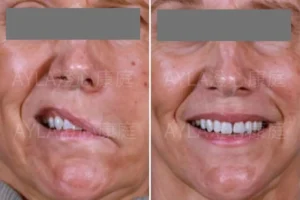
Drooping of the mouth, eyebrow, or eyelid on one side
Difficulty blinking or closing the eye completely
Drooling or trouble eating/drinking
Altered sense of taste
Increased tears or drooling from the affected side
Pain around the ear or jaw on the same side
Typical timeline of Bell’s Palsy Recovery
Peak symptoms occur within the first 48–72 hours
Improvement often begins within 2–3 weeks
70–85% of people achieve full or near-full recovery in 3–6 months
Some cases still experience long term weakness after a year
Early treatment, such as acupuncture, can help speed recovery and reduce the chance of lingering weakness
Bell’s Palsy vs. Stroke: Why Diagnosis and Early Treatment Matters
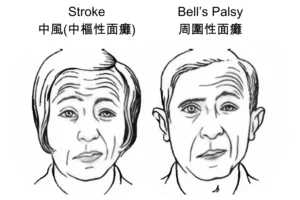
Bell’s palsy and stroke can both cause sudden facial paralysis or drooping. While Bell’s palsy affects the peripheral facial nerve, a stroke involves brain damage from interrupted blood flow. It requires immediate emergency care to prevent permanent brain damage or worse.
Key differences of Bell’s Palsy and Stroke:
Feature
Bell’s Palsy
Stroke
Affected area
Entire one side of face (including forehead)
Often lower face only (forehead spared)
Forehead movement
Cannot wrinkle forehead on affected side
Usually can wrinkle forehead
Onset speed
Develops over hours to days
Sudden (minutes to seconds)
Other body symptoms
None — no arm/leg weakness
Often arm/leg weakness, numbness on one side
Speech/confusion
Rare
Common (slurred speech, trouble speaking)
Additional signs
Altered taste, ear pain, sensitivity to sound, excessive tearing
Severe headache, vision changes, balance issues, confusion
If you are not sure about your situation, don’t delay seeking professional evaluation for peace of mind and the best recovery path.
Conventional Bell’s Palsy Treatments – Steroids, Antivirals & Their Limitations
The standard medical approach for Bell’s palsy often includes oral corticosteroids (like prednisone) to reduce nerve inflammation and, in some cases, antiviral medications (such as acyclovir) if a viral cause is suspected. These treatments work best when started within 72 hours of symptom onset.
However, limitations exist:
Not everyone responds fully — up to 30% experience incomplete recovery or lingering weakness.
Side effects from steroids (e.g. insomnia, mood changes, stomach upset) can be significant.
Evidence for antivirals alone is weak and inconsistent.
This is why many patients turn to complementary therapies like acupuncture for faster, gentler nerve support with fewer drawbacks.
How Acupuncture Promotes Nerve Regeneration & Reduces Bell’s Palsy Symptoms
Acupuncture offers a safe way to support recovery from Bell’s palsy by targeting the inflamed facial nerve and surrounding tissues. From both Traditional Chinese Medicine and modern research perspectives, it works through several key mechanisms to promote healing and ease symptoms. Acupuncture can help:
Reduces inflammation & nerve edema — By modulating inflammatory responses and cytokines, it helps decrease swelling in the facial nerve canal, relieving compression and creating a better environment for repair.
Improves local blood circulation — Needle stimulation boosts microcirculation and blood flow to the affected area, delivering more oxygen, nutrients, and healing factors to the damaged nerve.
Promotes nerve regeneration — Acupuncture upregulates neurotrophic factors, enhances axonal sprouting, inhibits neuronal apoptosis, and supports remyelination and collateral branch formation for faster nerve recovery.
Stimulates muscle function & reduces symptoms — It increases nerve excitability, stimulates muscle contraction, relaxes stiff facial muscles, and improves overall facial mobility, symmetry, and control.
These effects often lead to quicker symptom relief (e.g. less drooping, better blinking/closing eye) and higher chances of full recovery, especially when started early. Many studies show acupuncture accelerates the natural healing timeline without obvious side effects.
Latest Evidence on Acupuncture for Bell’s Palsy
There are several studies showing the benefits of acupuncture on Bell’s Palsy recovery and preventing recurrence:
Is acupuncture treatment safe for Bell’s Palsy at acute stage?
In Traditional Chinese Medicine and clinical practice, acupuncture for Bell’s palsy is tailored to different stage to maximize safety and effectiveness while supporting nerve recovery.
Acute stage (typically the first 7–10 days after onset, when inflammation and edema peak): We focus on gentle, distal acupuncture points — often on the hands, legs, or other body areas along affected meridians like Shao Yang channels. This approach reduces overall inflammation, improves circulation, and calms the pathogenic factors without directly stimulating the swollen, inflamed facial nerve. Using distal acupuncture points allows the body to naturally settle the acute inflammation first while speeding up the recovery process in a safe way.
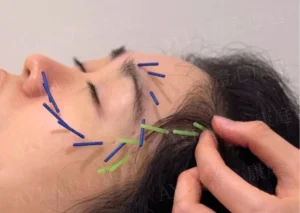
After the acute stage (subacute/resting phase from about day 8–21 onward, and into recovery): Once inflammation subsides and the nerve is less sensitive, direct facial acupuncture becomes very safe and highly beneficial. Needling local points with appropriate techniques stimulates nerve regeneration, enhances muscle function, improves facial symmetry and mobility, and accelerates full recovery. Many patients experience noticeable improvements in blinking, smiling, and expression when treatment starts or intensifies at this point.
This staged approach — gentle and systemic early on, then targeted locally — aligns with evidence showing faster, more complete healing when acupuncture is adapted to the phase of Bell’s palsy. Early consultation ensures the best personalized plan for your recovery.
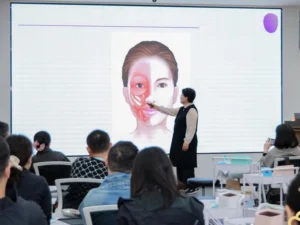
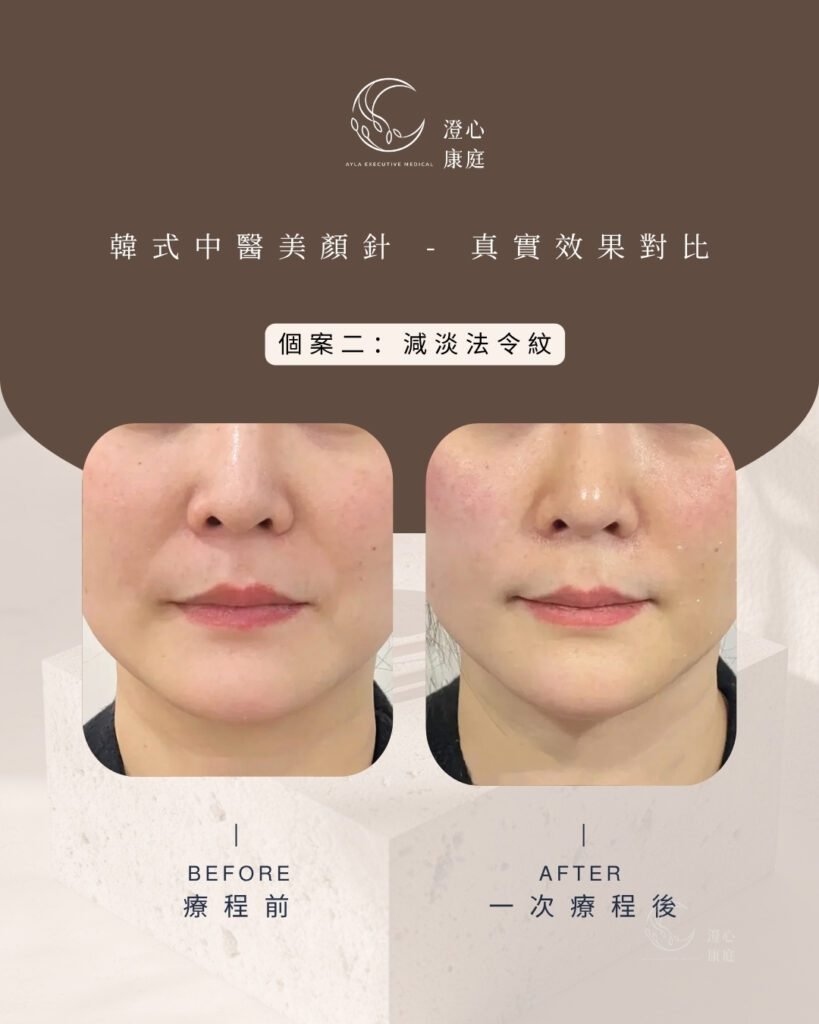
Professor Song Jeong-Hwa(송정화) from Kyung Hee University in Korea used facial acupuncture to treat facial paralysis (Bell’s palsy). Surprisingly, the treated side of the face showed significant improvements in skin texture, fine lines, and lifting effects. This discovery led to the formalization of the F.A.C.E. (Facial Acupuncture for Charm and Elegance) protocol. This Korean style facial acupuncture technique combines modern medical anatomy with Traditional Chinese Medicine meridian theory to give an even more effective improvement on cheek lifting and wrinkle smoothing.
Enhancing Results: Acupuncture + Chinese Herbal Medicine for Bell’s Palsy
Combining acupuncture with customized Chinese herbal formulas can significantly boost self-recovery from Bell’s palsy. While acupuncture improves circulation, and promotes nerve regeneration, herbal medicine (such as those that clear heat, invigorate blood, and nourish qi) address underlying imbalances more deeply and promote overall vitality. This synergistic approach often leads to faster symptom relief, better facial muscle strength, and higher rates of complete recovery—especially in stubborn or prolonged cases—with minimal side effects when prescribed by a qualified practitioner.
Bell’s Palsy Treatments FAQs Answered
Can I take steroids and get acupuncture treatment at the same time?
Yes, it’s generally safe to combine oral steroids (prescribed by your doctor) with acupuncture for Bell’s palsy for best result. Steroids reduce inflammation at the acute stage, while acupuncture supports nerve regeneration and faster symptom relief with no known interactions. Always inform both your doctor and acupuncturist for coordinated care.
How Many Acupuncture Sessions Are Needed for Bell’s Palsy?
Acute cases often see faster progress. Most patient can see improvements in 2-3 sessions of acupuncture. For better recovery and result, usually 1-2 sessions per week is suggested in the first 4–6 weeks (6–10 sessions total for most cases). Chronic or stubborn cases may require 10+ sessions and sometimes with herbal medicine assisted. Results vary by individual response and timing—early treatment usually means fewer sessions needed.
Does Acupuncture Hurt When Treating Bell’s Palsy?
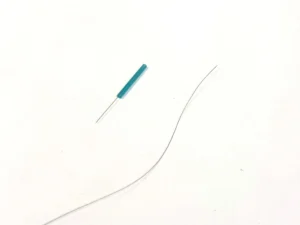
Almost all patients found acupuncture treatment endurable and relaxing. After the acute stage, ultra-fine needles(0.10-0.12mm), which are thinner than hair, are usually used in facial acupuncture. Most patients report there is nearly no discomfort or pain in most area. The gentle insertion and relaxed experience allow patients to chat with acupuncturist as ususal during the treatment.
There’s a fire in you that you can’t see. Not the visible kind — no swelling, no redness, no heat to the touch. This is inflammation at its most insidious: low-grade, systemic, and silent. It doesn’t announce itself with acute symptoms. Instead, it accumulates. It smolders in your tissues while you carry on with your
In a city that never quite switches off, sleep has become something of a luxury. Late-night scrolling, dinners that linger too long, the mental residue of a demanding day — these small, seemingly innocuous habits accumulate, keeping both mind and body in a state of quiet alert. The good news? There’s a formula for this,
You can’t think your way out of anxiety. Sometimes you need to hear your way out. Sound therapy isn’t about listening to relaxing music. It’s a method that uses specific frequencies to shift your brain into a calmer state — reducing anxiety, improving sleep, and helping your nervous system step down from chronic alert. This